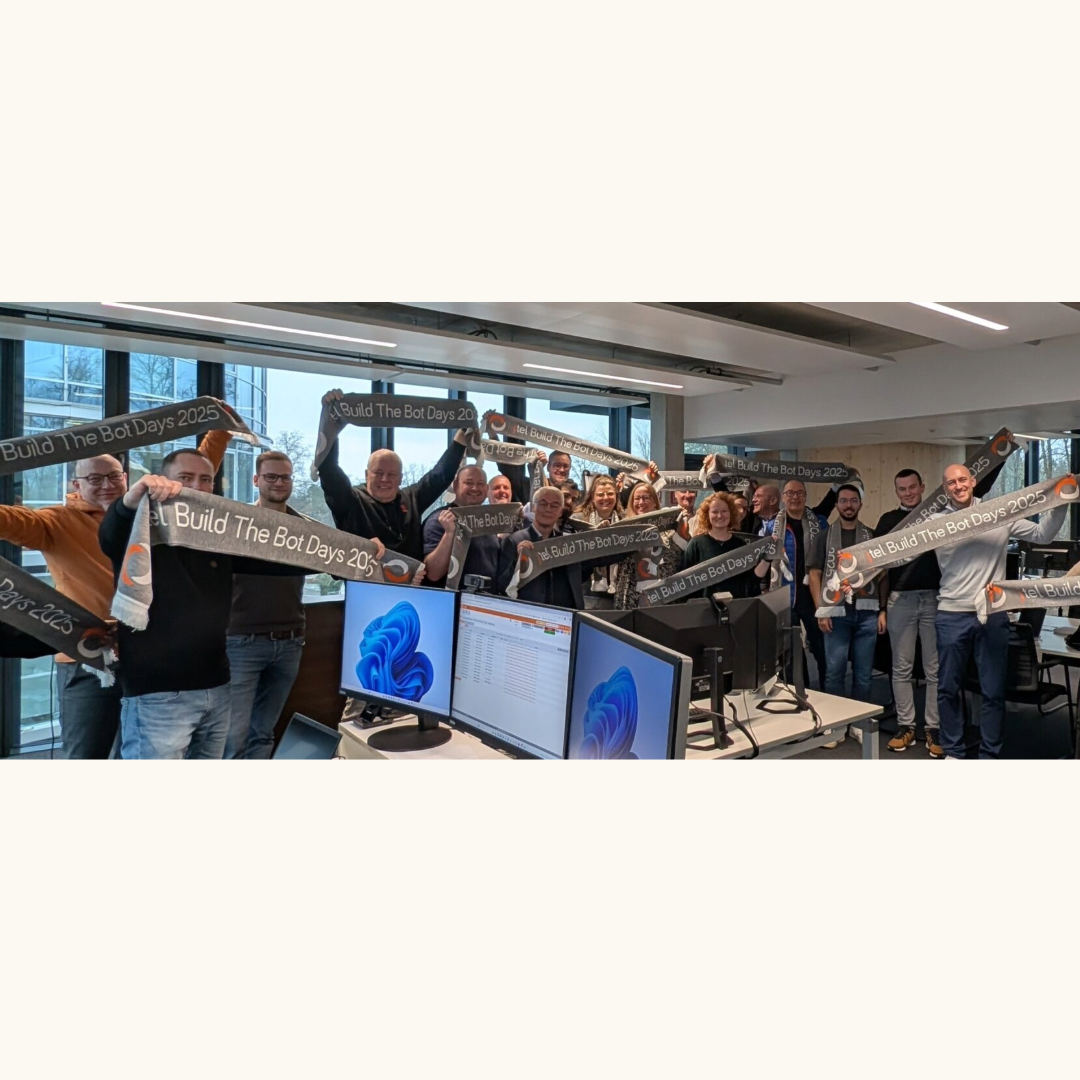
The second jtel "Build The Bot Days" took place in Ottobrunn on November 26 and 27. This event served as clear proof of the success of the 2024 debut and sent a strong message to the customer service industry: "Yes, you can build your own bots to enhance your specific service processes using AI!"
As in the previous year, five teams competed against one another. "Build The Bot Days" is, after all, a competition where a winner is declared based on clearly defined criteria. Over the course of two days, the participating corporate teams used the jtel platform to develop their own chatbot and voice bot solutions, intended for future deployment within their respective companies. This year’s participants included Styria Österreich, Landwirtschaftsverlag, CJD Clinic Job Dress, Krieger Gesundheit, and Green-IT. Each company sent two or three customer service experts and IT specialists to jtel’s headquarters in Ottobrunn. Each team received personalized support from a jtel developer and, where applicable, an expert from their supporting system integrator.
High priority was given this year to bots capable of automating frequently recurring processes or sub-processes. These primarily included caller pre-qualification and authentication, automated call routing/switchboard functions, shipment tracking, and RAG-based knowledge bots—in short, tasks that do not necessarily require handling by a human agent. It became evident that integrating existing backend systems was a key component of this year's solutions. By utilizing standard APIs or SQL queries to access the customers' existing systems, the bots are empowered to provide accurate information, as well as collect and write back data. Various solutions are employed for ASR and TTS, depending on the customer's data protection requirements and performance needs.
We structured our hackathon as a competition. And a competition requires a jury to provide a fair and independent assessment. Clear evaluation criteria are in place for this purpose: Has the use case been resolved? Is the customer experience effective? What are the levels of response accuracy and relevance? How creative is the solution? And last but not least: What does the business case look like? The jury critically examines all these criteria and scores them on a numerical scale. To ensure no one gets the impression that the outcome is subject solely to the whims of a few individuals, there is a second group of evaluators: the participants themselves. They, too, are asked to rate the other solutions based on the aforementioned criteria, thereby gaining insight into the various approaches. Let the games begin!
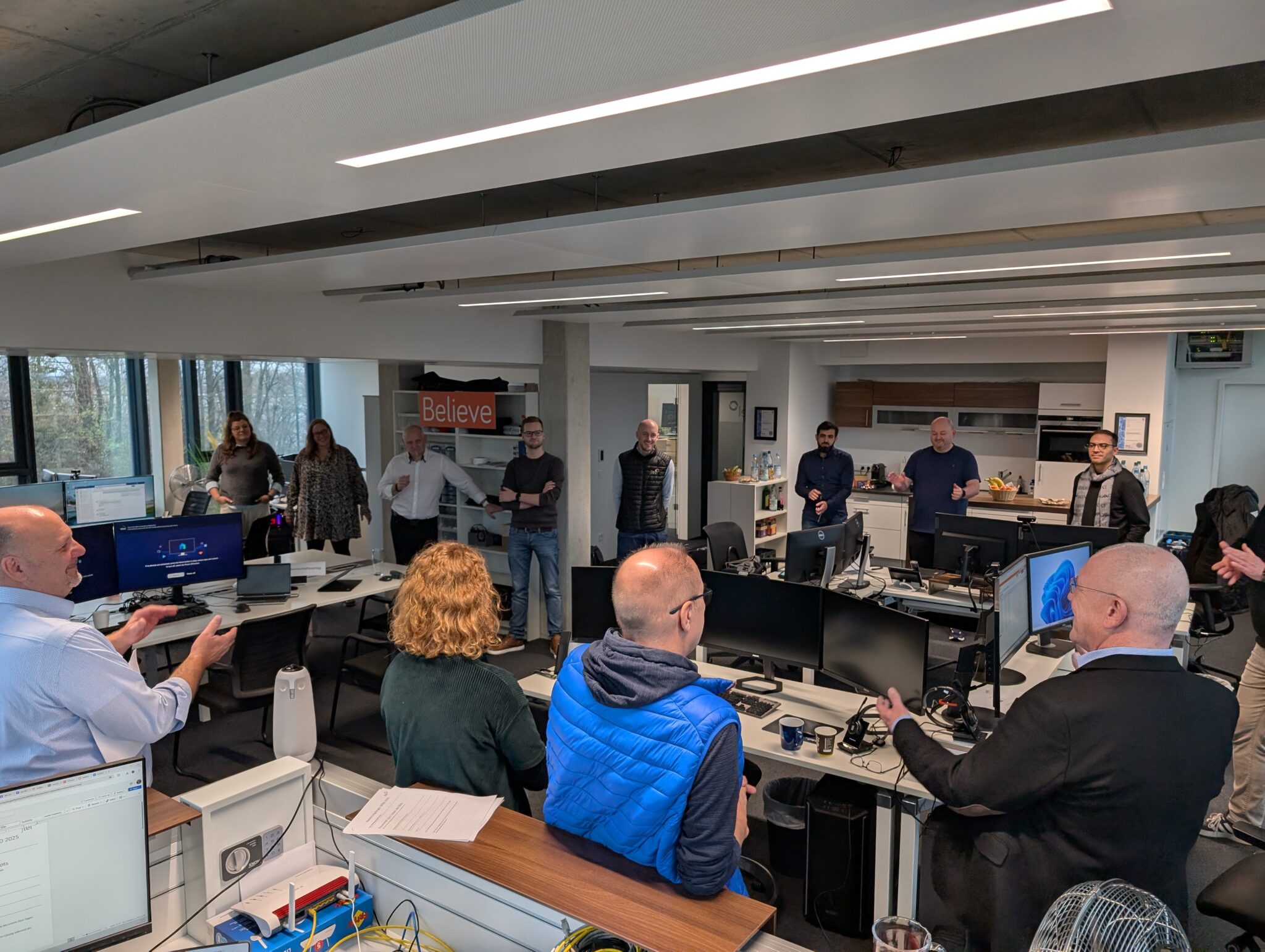
Numerous bots were brought to life on the very first day. The first step always involves thinking through and sketching out the process. This workflow can be quickly mapped within the jtel system, and the necessary ASR/TTS components populated with credentials—such as Azure keys—and APIs connecting to the relevant backend systems. An AI application is pointless without a leading process tool, like the jtel routing application! Next, the team immediately tries calling the bot to test its behavior, fine-tune the speech, and review initial results. Does the REST query to the CRM work? Are we getting tracking data from the shipping system? Does the bot sound like a real person? Is the speech too fast or too slow? Is the intonation right? There is a flurry of programming, testing, and experimenting—to the point where participants sometimes have to be practically forced to grab a sandwich and replenish their electrolytes during the lunch break! The teams keep iterating toward the desired outcome, and by the afternoon, satisfied grins are appearing on faces here and there. "The machine does what it's supposed to!" This phrase quickly becomes the event's running joke. But at 5 p.m., it’s time to stop hacking; now we want to grab a bite to eat together. So, we head off to a local inn to unwind amidst the cozy, traditional Bavarian atmosphere. Yet, the conversation keeps circling back to the main topic: figuring out what the other teams have achieved so far. Do we still have a shot at first place? What do we still need to improve? What clever trick could we use to make the most of the backend data? The tension is mounting—yet despite the sporting rivalry, a sense of camaraderie quickly develops, and participants exchange ideas. We love bots!
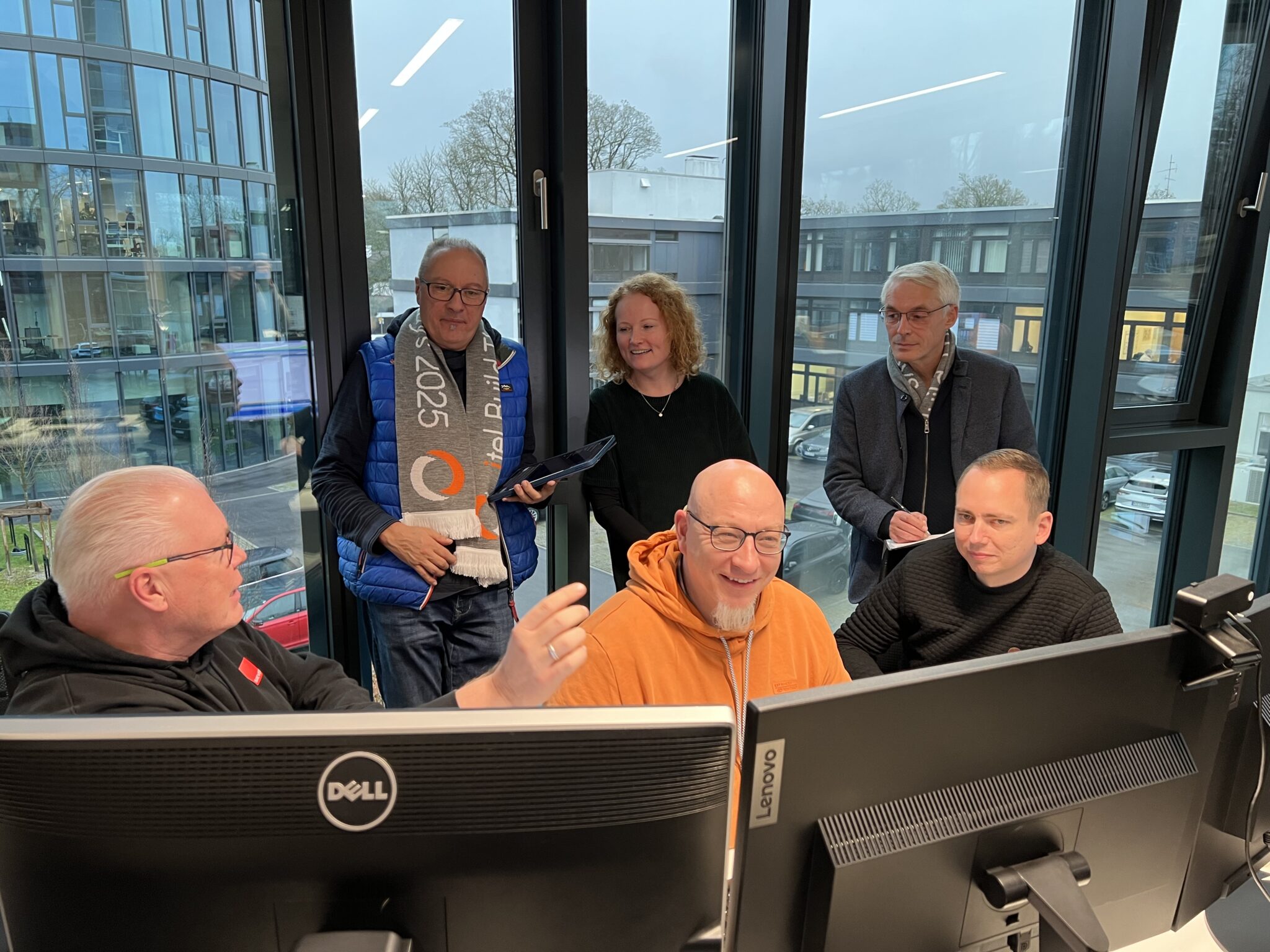
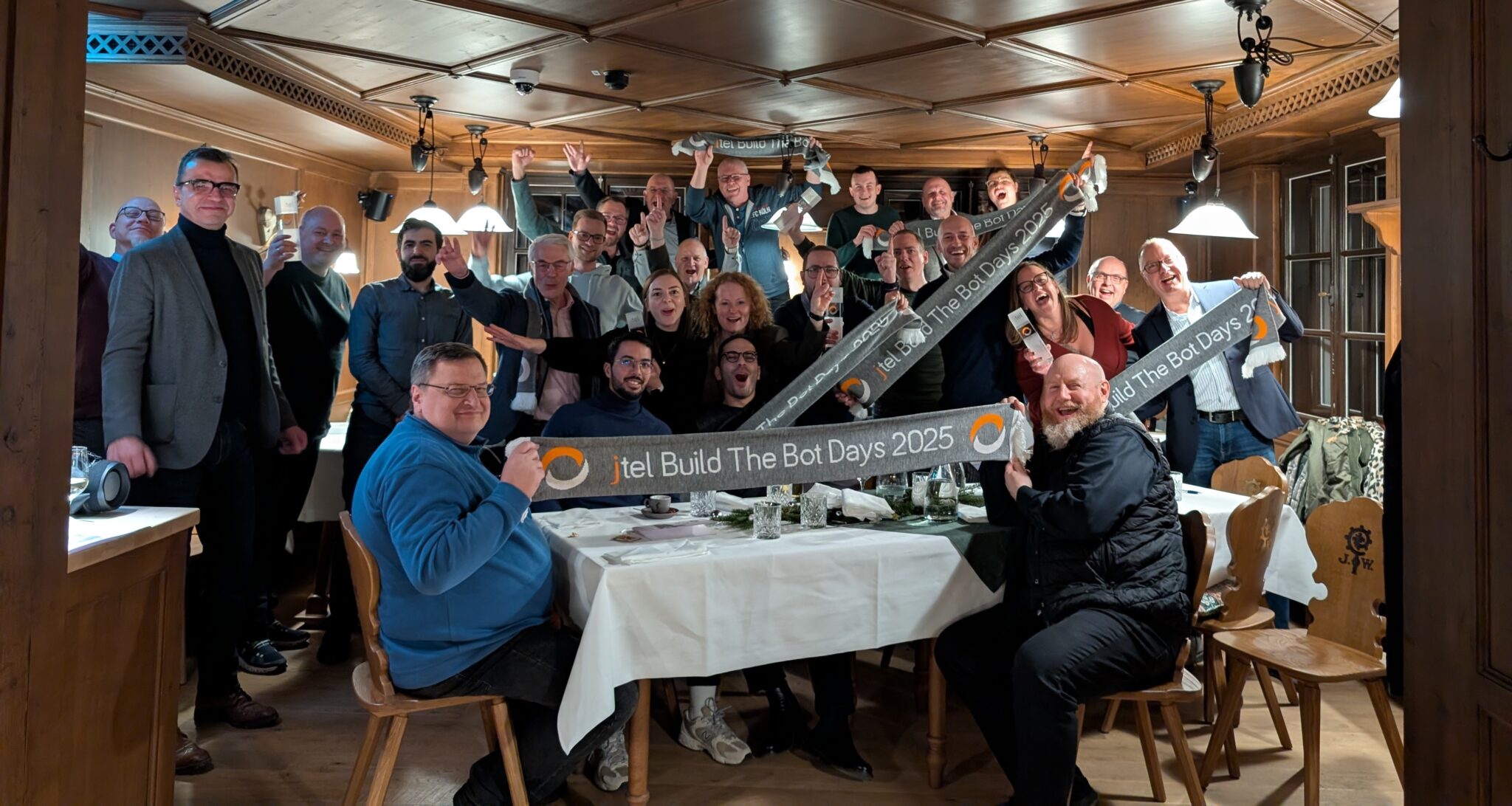
During the morning, final—and sometimes quite extensive—polishing work is carried out before the fine-tuning begins. This is a crucial step, as the customer or caller is ultimately the one who will be merciless in their criticism; if they refuse to engage in the dialogue, even the best technology is useless. Just how user-friendly is the whole thing? Is the bot ready to be unleashed on the public? Calls are made and the website chat function is put through its paces, over and over again. The clock is ticking, and by midday, the moment arrives: the jury makes the rounds, visiting each team in turn to have the results presented to them. There is questioning, testing, evaluating, discussing, refining, and celebrating. And the tension mounts once more. Will our bot do what we want it to do this evening? At 5:00 PM sharp, it’s time to wrap things up—laptops closed, and off to the awards ceremony! The suspense builds. Upon arriving at the inn, we first fortify ourselves with some hearty mulled wine in the courtyard; the campfire keeps us warm, and the mood is high-spirited. Then, finally, dinner—excellent, though the food is secondary to the anticipation. After the main course, the moment arrives, and a buzz of excitement fills the room. The projector and screen are set up, and each team has ten minutes to present its solution to the audience. Moderated by the jury, every team presents its solution live. Amplified by microphones and the venue’s sound system, all BTBD participants witness the first genuine, self-designed bot dialogues. It is truly gratifying to see that all five solutions work brilliantly. How on earth can a fair judgment be made? Thunderous applause is the best validation of a job well done—but who will be the champion?
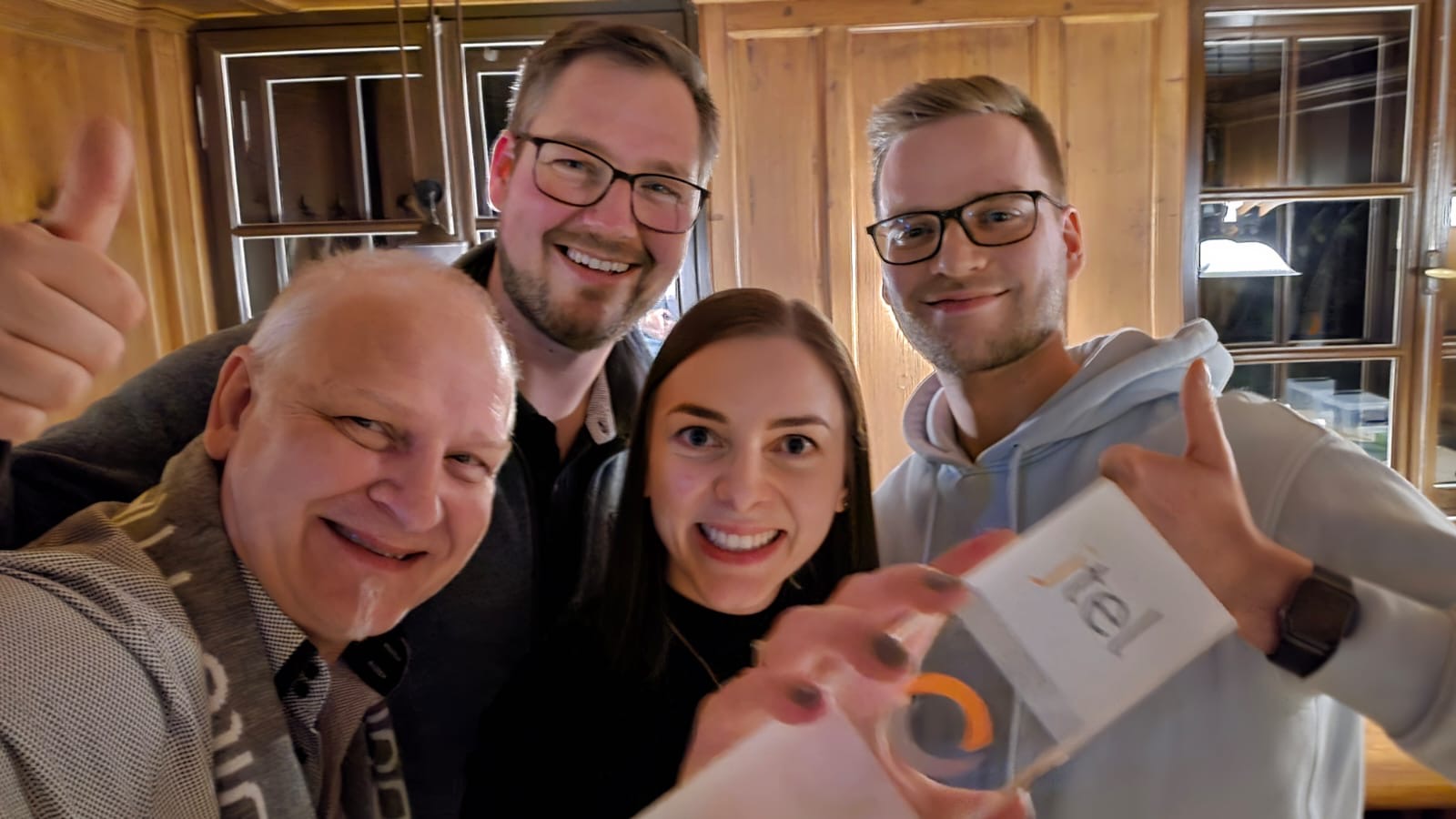
The jury finally retires to the back room—a time for renewed excitement, anticipation, and deliberation. It feels like an eternity before Martin Bürstenbinder, Annkatrin Touchie, and Detlev Artelt re-enter the hall with serious expressions. Long story short: EVERYONE won! After all, every bot serves its purpose, is ready for launch, and is set to generate revenue. The results vary only slightly in terms of customer experience and business case—but it is these nuances that tip the scales. Winning by a nose is the Landwirtschaftsverlag team, with a complaint-handling and referral bot for its flagship product, "Landlust." Hats off to the team from the Münsterland region! The participants celebrate together in high spirits, and when the call for "last orders" finally comes—Munich-style—we reluctantly leave the venue.
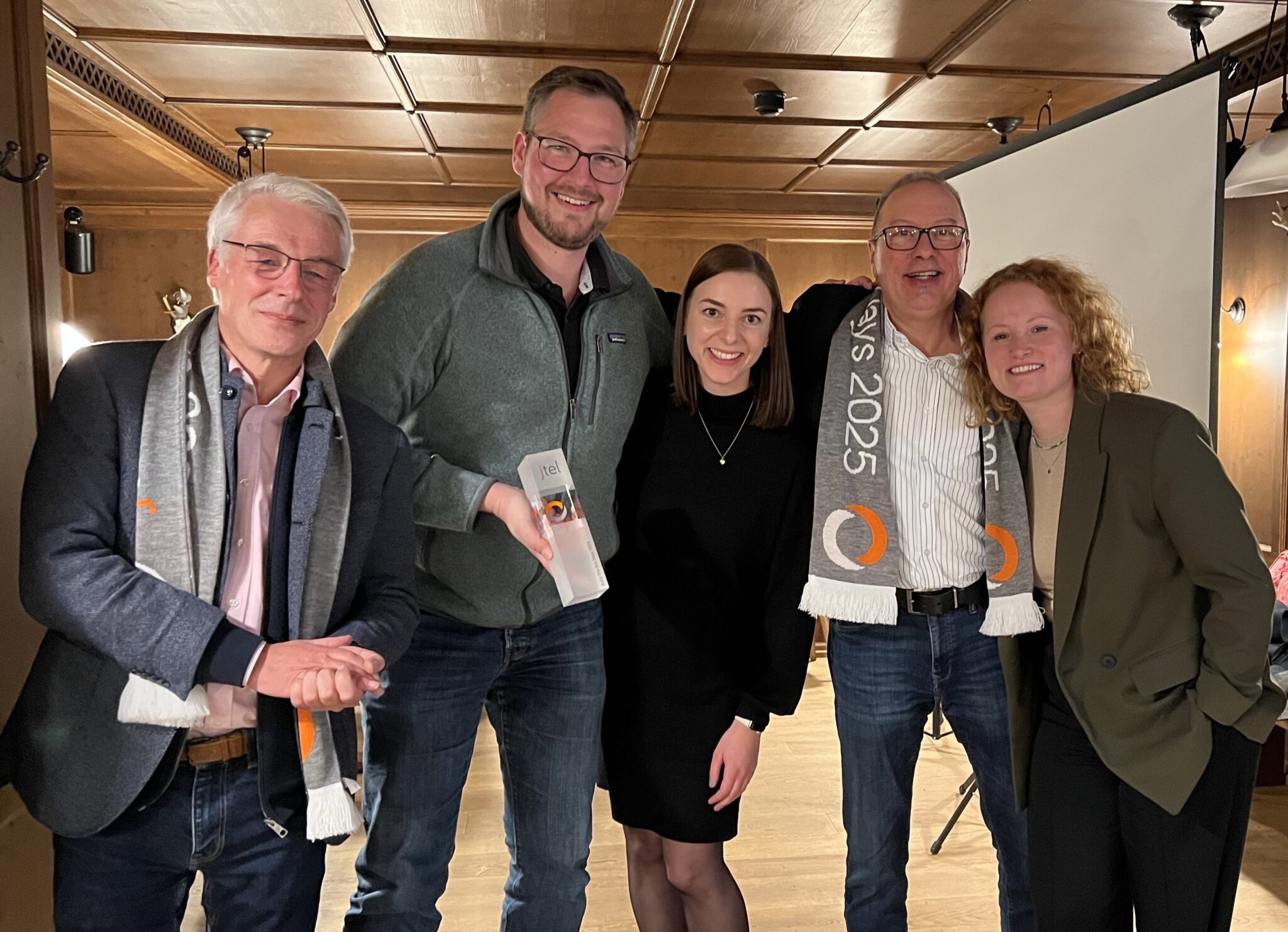
In summary: Expectations were exceeded for all participants, the jury, and the jtel team alike. We achieved our goal of ensuring every team could take home a functional, value-generating bot. The creativity and spirit of the event inspired everyone, and the mental barriers surrounding bot development were overcome. Who knows what modular solutions might be developed next? Thorough preparation laid the foundation for this success; having the right tools at hand is essential. Once the service process is well-thought-out and defined, the necessary components—ASR, TTS, AI, APIs, and required system access—must be in place. The participants devised and defined their ideal solutions beforehand with great creativity and professionalism. During the hackathon, jtel’s developer expertise helped get the bots up and running quickly. The results were outstanding end-to-end solutions and happy faces. Many thanks to everyone who contributed!